
Sleepo
During my DTT Multimedia internship I ran an A/B study on Sleepo to test whether scientific cues in a health app description increase subscription intent.
- Role
- UI/UX Researcher / Designer
- Timeline
- 2024
- Tools
- Figma, SPSS, Qualtrics
Overview
During my UI/UX design internship at DTT Multimedia, I ran a research study on Sleepo, a mobile sleep app, to test how scientific cues in an app description affect purchase intention.
The question was practical: can evidence-based language strengthen trust and make people more likely to subscribe?
Ownership
- Study design and research questions
- A/B description variants in Figma
- Qualtrics survey and participant flow
- SPSS analysis (two-way ANOVA)
- Synthesis into design recommendations
Problem
Many health apps struggle to convert free users into paying subscribers. Credibility cues such as scientific evidence are often assumed to help, but it was unclear how much they matter in a mobile health app context.
Research questions
- RQ1: To what extent do scientific cues (present vs. absent) in a health app description influence purchase intention?
- RQ2: Does personal interest in scientific information moderate that effect?
Method
I designed a between-subjects experiment comparing two versions of a Sleepo app description.
Conditions
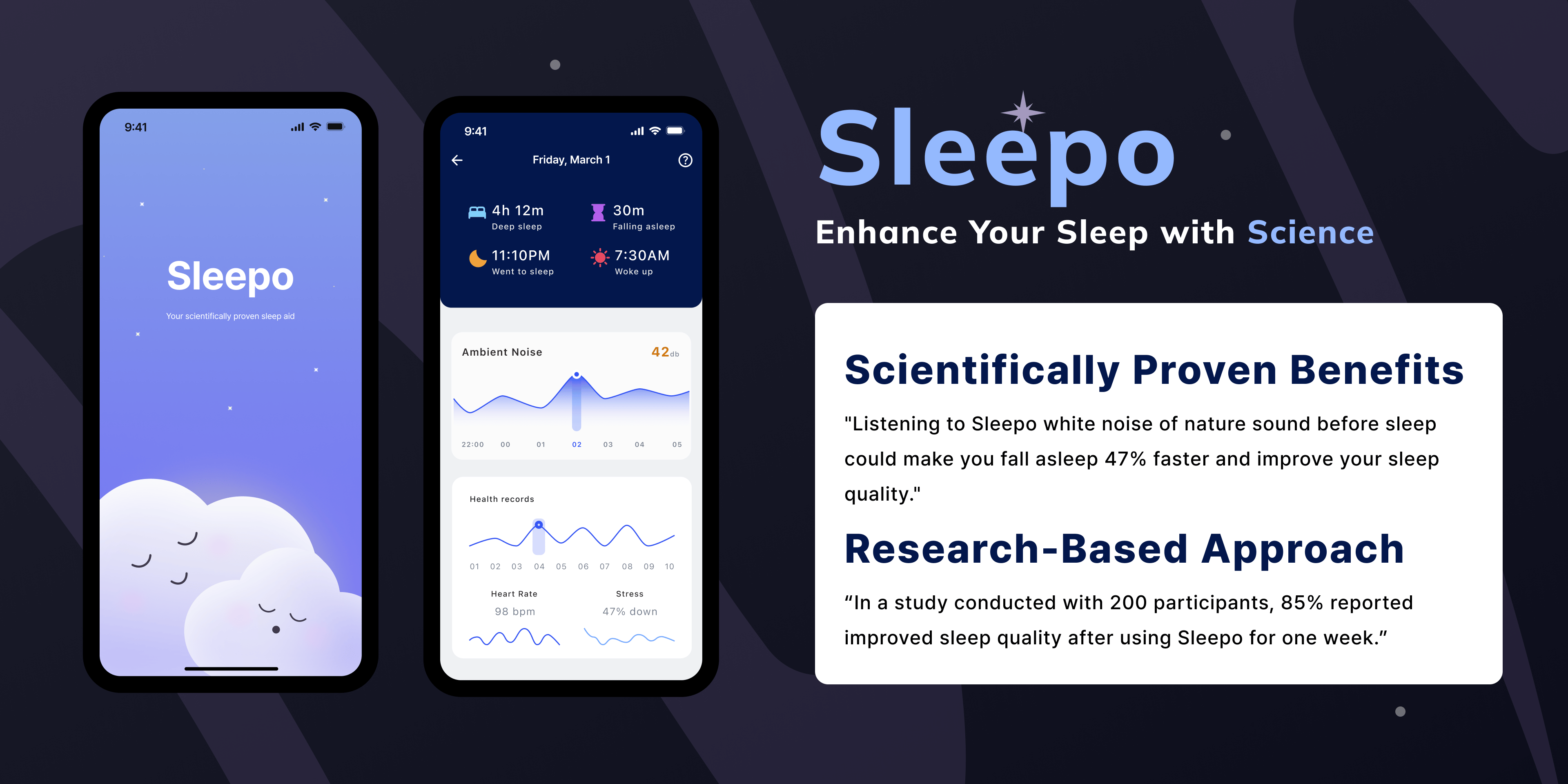
Version A (cues present)
Claims such as “Listening to Sleepo white noise can help you fall asleep 47% faster, backed by scientific research.”
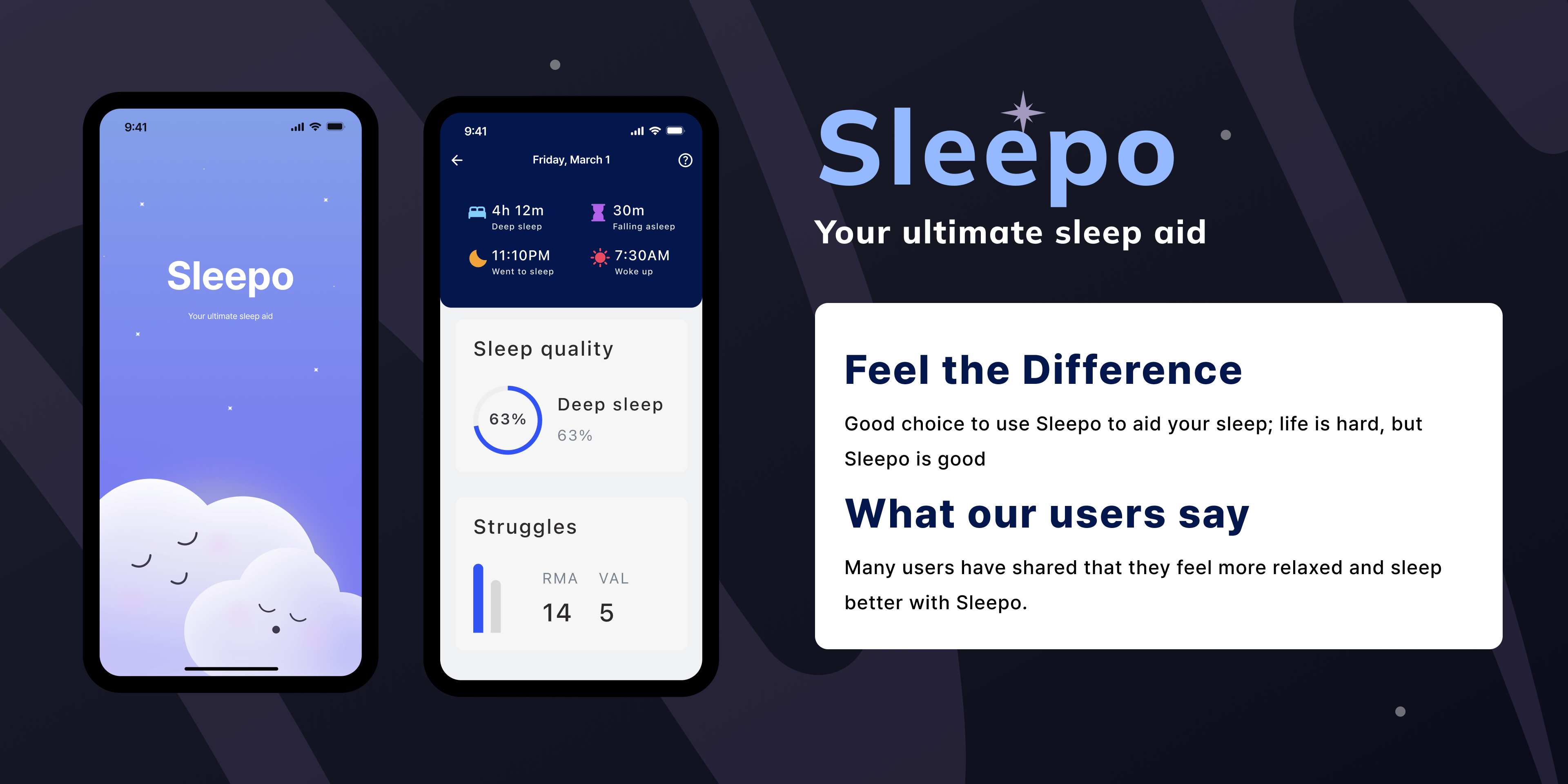
Version B (no cues)
General statements such as “Good choice to use Sleepo to aid your sleep.”
Participants and measures
- 124 participants, randomly assigned to A or B in Qualtrics
- Purchase intention measured on a Likert scale
- Interest in scientific information measured as a moderator
- Analysis with a two-way ANOVA in SPSS
Results
Presence of scientific cues had a significant effect on purchase intention, F(3, 120) = 8.3, p less than .005. Interest in scientific information did not, and the interaction was not significant.
In short, evidence-based cues raised subscription intent. How interested someone already was in science did not change that pattern.
Main and interaction effects
124 participants in the Qualtrics experiment
Randomized between-subjects assignment to Version A or B. Scientific cues raised purchase intention (p less than .005).
Key findings
What held up
- Scientific cues increased purchase intention. People who saw evidence-based claims were more likely to say they would subscribe (p less than .005).
- Interest in science did not moderate the effect. High- and low-interest users were both influenced by the cues.
That suggests evidence-based microcopy can raise perceived credibility for a broad audience, not only for users who already care about science.
Reflection
The project reinforced that design decisions about trust should be tested, not assumed. A/B testing and basic stats made the recommendation sharper than opinion alone.
It also showed how much UX writing matters. A few scientific cues in the description moved purchase intention, which is a reminder that credibility lives in the words as much as in the visuals.
For health products, persuasion and trust have to stay in balance. Here, evidence-based messaging was a useful UX tool because it made the value claim feel grounded.